
 (615) 208-5774
It’s widely acknowledged that artificial intelligence (AI) will drive significant change, particularly in marketing and sales. A McKinsey study, “The economic potential of generative AI: The next productivity frontier” underscored this point, “Generative AI’s impact on productivity could add trillions of dollars in value to the global economy. Our latest research estimates that generative AI could add the equivalent of $2.6 trillion to $4.4 trillion annually across the 63 use cases we analyzed.” As Forbes put it, “If you’re a marketer and you’re not using AI, you’re missing out on the benefits of what is possibly the most transformational technology.”
In reality, the notion of marketing without any form of AI is becoming increasingly unlikely. Marketing tools offer their own versions of AI tools that marketers are using without even thinking about it. From social and search engine advertising solutions to email marketing platforms and e-commerce tools, AI functionality has become ubiquitous in marketing technology. From social and search engine advertising solutions to email marketing platforms and e-commerce tools, AI functionality has become ubiquitous in marketing technology. However, it’s important to clarify that this isn’t the “general” AI we often imagine but rather software designed to assist in specific tasks, such as optimizing advertising placement or personalizing email content based on data insights. As the Harvard Business Review put it, “Will machines take over marketing and sales functions? No.”
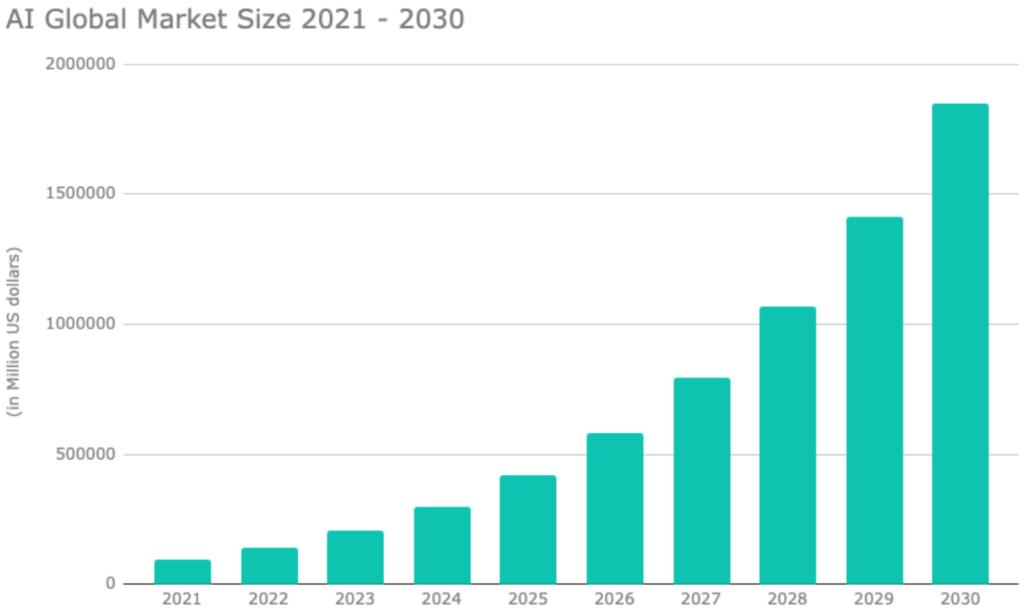
Despite the widespread availability of AI-powered tools, many marketing departments still lack a coordinated, strategy-focused approach to implementing larger projects. There’s a noticeable gap in fostering an AI-friendly, data-first culture and developing the necessary competencies and skills within marketing teams.
Goldman Sachs is predicting that two-third of jobs could be partially automated by AI, but many will be complemented by AI, not substituted by it. AI is helpful when it comes to efficiency, but a human touch is still needed to complete an authentic experience for prospects.
Only a handful of the world’s top Chief Marketing Officers have publicly discussed or been associated with the use of AI. While industries like healthcare and financial services have embraced AI for operations, the integration of AI within marketing and sales is still relatively in its infancy.
Best Practices for Using AI
In navigating the integration of AI into marketing and sales strategies, it’s essential to heed best practices that ensure the effective and ethical use of this transformative technology. Some key considerations include:
- Balancing Human and AI: AI isn’t a replacement for human intuition and creativity. It’s crucial to combine AI insights with human expertise and perspectives to craft compelling strategies and content that resonate with audiences.
- Defining AI’s Role: Clearly define the role of AI in your marketing and sales processes, determining which tasks can be automated and which require human input.
- Evaluating Complexity: Assess the complexity of tasks and their impact on customers. While AI can streamline certain processes, human interaction may be preferred for more complex or sensitive interactions.
- Fact-Checking and Oversight: Verify information and insights provided by AI tools before making decisions, recognizing that while AI can be efficient, it’s not infallible.
While AI is poised to revolutionize marketing and sales, its successful integration hinges on a thoughtful and strategic approach. Harvard Business Review echoes this, “Humans are needed to monitor outcomes on an ongoing basis in order to provide continuous feedback to the AI models.” By embracing best practices and fostering a culture of collaboration between human and AI capabilities, businesses can harness the full potential of this transformative technology to drive growth, enhance customer experiences, and shape the future of marketing and sales.
